
While many are spending this time of year revealing their favorite (recent) annual releases, I ask exemption from the rat race to instead focus attention on a recently discovered personal favorite.
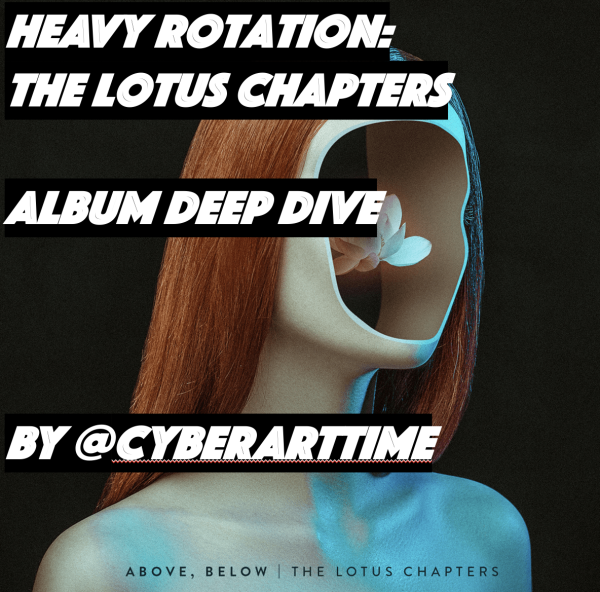
The Lotus Chapters is a record by Above, Below conceived as a narrative about life in its entirety told across three chapters, each chapter paired with a mantra revering one of Hinduism’s Trimurti:
- Chapter 1: Birth & Childhood. Revering Brahma (The Creator). “Om Kham Brahma”
- Chapter 2: Adolescence & Early Adulthood. Revering Shiva (The Destroyer). “Om Namah Shiviah”
- Chapter 3: Mid-Life and Life’s Closure. Revering Vishnu (The Sustainer). “Om Namo Bhagavate Vasudevaya”
The record is teeming with references to Hinduism. One may disregard these appellations to religious traditions as just another means by which the New Age Movement has co-opted a deeply nuanced practice, but the tracks where these mantras are featured reveal an intimate understanding of the subject matter.
Hinduism maintains that life is a play we participate in. A play that is acted out for what may seem like an eternity, through countless lives1, lived by us.
We are all one experience.
Track 1. Chapter I: Seed
The first track concerns itself with awakening2: An individual, upon inception.
The record cuts in with soaring vocals from lead Jacob Wilkes, who vocally channels a calm hopeful melancholia reminiscent of Sameer Gadhia(Young The Giant) to exclaim:
Consciousness blossoms from primordial forms as a self-deterministic act of creation and beauty.
As the soft lush undertones introducing the record draw out, Wilkes pairs his initial instruction6 with a mantra offering gratitude to Creation.7
”Om Kham Brahma.”
Brahma is the godhead from which everything emanates, including you.
The strings in the track eventually resolve8 into ominous tones.
Reality comes into focus.
A transition is realized.
Darkness lingers in this new reality full of possibilities.
Track 2. Eternal Sunshine
The strings join the ambient arrangement of the previous track and are soon backed by the full band complement which harmonizes into a tone of defiantly caring rage. In a literal sense, the song’s narrative addresses a coming of age marked by the realization of imminent death.
We sip from the fountains of innocence
And slip through the confines of existence9
And as The Sun10 peers down upon us all11
Its glow evades the eyes12
Of the ones grown old
It is as if The Band reveals its response to existential dread, originally found in the innocence of youth: Dream. Create. Play.
The Darkness is consumed by light
And my dreams, elated, take flight
A lesson learned which, when young, seems to require abandonment in favor of maturing/growth:
But our underdeveloped is our limbic system
And all of these visions will be lost
An esoteric contemplation
On what we’re meant for in this life
Yearning to grow but still confined to a seed.
The defiance calms as growth is realized, but at the expense of relatively carefree action.
The mind of a child, so sublime
Blissfully ignorant
Leaving roses at the devil’s shrine
So unaware of the dark out there
Without realizing it, we had been courting darkness all along, and now we find ourselves adrift in the proverbial dark forest…
Track 3. Labyrinth
A standout (even) among the (sublime) early tracks on the record, Labyrinth, is where the band’s vision for the record comes into full view.
The band narrates a vivid scene of a person priming themselves ahead of scaling the vertical labyrinth full of obstacles, which serves as allegory for ascending13 the Tree of Life towards a veiled destiny.
With silken hands14 placed upon the lungs of the earth
I scale the labyrinth
Although challenged with hardship, it’s through the protagonist’s persistence that they are able to see, then sense, and finally touch the light15 peering and reaching out to them below the tree’s full canopy. The connection with the light results in an ecstatic vision.
I reach up, hold hands with the energy
All fear collapses as I dance with ecstasy
The experience convinces the protagonist to move forward and with each subsequent obstacle, the elements from beyond the canopy provide consolation, and more importantly: affirmation.
The evening breeze soothes my frail mind
The setting sun breathes through the bitten leaves
Enticing our hearts toward the unseen
[…]
Through the ordeals one lesson is repeated: Trust yourself. Divinity lies within.
The heart of the elm beats with me synchronously
[…] if we close our eyes and feel the gravity
Put our faith in intuition
We’ll breach the canopy
The band’s declaration serves as a prescription to fear. Have faith in sincerely approaching obstacles and reunion with The Eternal Light will be eminent.
”Oh Kham Brahma.”
Track 4. Kensō
Relief from the intensity of the previous track, Labyrinth, is not offered in Kensō, as the band doubles down on themes of (self-) discovery.
Deeply mystical themes are integrated into the experiential narrative that is this full record. If it wasn’t clear before, it should be now: The protagonist of this record is you.16
The track has a sophisticated structure broken up into four parts over four minutes to address the complex theme of the track’s namesake: Kensō.17
Part I. The First Thought concerns itself with and desire for knowledge and the urge to actively seek it.
I bid my mind and body to drop off18
To rise clear of even the finest dust19, the finest dust
Part II. The Kenshō involves receiving wisdom from beyond. The eternal self challenges the protagonist to feed their curious nature and seek deeper understanding.
Would you believe that this subtle dream20 // Has more truth than reality could ever deem?21
Water the seed, let the lotus breathe22 // It reveals the true nature of you and me
Part III. The Attempted Understanding portion of the track concerns the effervescent nature of the Kensō. A quality typically associated with transcendental (or “ecstatic”) experiences.
What is this mystery that slips away as these words spill from my lips?23
Why do you grant me, why do you grant me these mosaic eyes? 24
Part IV. The Exodus describes returning to the original state of consciousness but being transformed by the recently experienced vision25. The experience pushes the protagonist into another stage in life; a stage of life resulting from a new awareness of self, and the desire to understand one’s place in life. As the protagonist ventures forth darkness is at first sensed, and then directly felt.
So blinded by the sun, my eyes refused to see the night
Perhaps if I embrace the elder moon, I’ll understand what’s wrong and right
I’ve felt the wisdom of the Kenshō, I hold faith in what was told
But as I leave the seed, my once mothering womb, for the first time I felt the cold
We emancipate and then suffocate
The strings in the track eventually resolve into ominous tones.
Our perception of the reality we’ve been inhabiting changes
A transition is once again realized.
Darkness lingers in this new reality full of possibilities.
Track 5. Chapter II: Flourish
Chapter II opens with an interlude utilizing Phrygian Scale, teasing that threats are imminent. The interlude contains a mantra often associated with the banishment of negativity and courageous intent.
Om Namah Shiviah26
Track 6. Mantra
The darkness sets in and the protagonist has a confrontation with their shadow, represented in the track by the Ancient Greek personification of Sorrow: Achlys. Band Lyricist Zac Adamson notes Achlys is also known as “The Mist of Death” – strongly implying a confrontation with one’s mortality.
The structure of the track is highly varied but satisfyingly resolves with each transition. The track starts with a calm ambiance and transforms into steady defiance containing undertones of vulnerability. Vocalist Jacob Wilkes masterfully controls the subject matter with each successive plea for help, understanding, and grace respectively containing one of the five stages of grief.27
Numina28: hold my hands, whilst I dance with entropy
I can’t bear to feel your sultry grip slip away from me
Please don’t let go, don’t let me fall
Into the darkness
Into the angst and woe
The protagonist is advised not to resist the darkness, but to integrate it.
”Breathe, ” she says “Breath in the night…”
The cold air will open your eyes
To the other side, the other side of the divine
The Integration of darkness allows for a fuller understanding of happiness via the promotion of gratitude. Making peace with one’s mortality will allow them the wisdom and grace to appreciate the fleeting beauty of life before inevitable death – A death which should not be feared because it punctuates life.
The protagonist questions the advice as it contradicts many of their intuitions, and they finally plead for understanding.
Everything I loved was merely the shadow of youth
My soul’s voice calls out to Shiva
Present to me your eternal mantra
Track 7. Blood Wine
Blood Wine sits smack in the middle of the record serving as its climax.
It is highly energetic, melodic, and direct. Blood Wine deals with defining appropriate boundaries in all types of relationships to maintain balance with one’s immediate social environment. The song is divided into two parts:
1. Elegy (Self-blame // Self-reflection)
Writing scriptures of hatred about the ones I love –
How is this the person that I’ve become?
What have I become?
2. Diatribe (Verbal attack // Emotional Release)
You’re just a fucking snake, spitting words of venom
Infecting those you love, enraging those who hate you
You’re toxic – and alone
You sit upon a serpents throne
Eventually, the protagonist realizes their role in perpetuating the toxicity they find in their lives, revealing the main lesson of the track: We have the ability within ourselves to harm others the way they have harmed us; we have the power to liberate ourselves from abusive relationships29.
… But it’s my greatest shame
I’m exactly the same
A willful player in this devils game
Track 8. Beyond The Mosaic Garden
Beyond The Mosaic Garden is a track centered on pluralistic thought.
It explores how personal (Internal and Subjective) experiences are regarded as deeply authentic by the individual experiencing them. The record contends that unique individual experiences are varied perceptions (sensed) and interpretations (reflections) of the fundamental underlying essence we all emanate from.
From within this void, we are all reborn
The vines constricting your thoughts are now torn
Dimensions break and reshape to show,
that there is more to life than meets the eye
We exist in an elaborate lie…
Lyricist Zac Adamson explains30: “Who are we to judge someone else’s delusions as fake when it may be wholly realistic to them?”
The band challenges the listener to shed their ego in favor of conceiving new perceptive paradigms. In turn, this shifted perspective will promote creation – implicitly eliminating oblivion.
We must destroy this panoptic delusion
Create reality
Maim the travesty
Begin extrapolating
Stop evaporating
Track 9. Chapter III: Bloom
Knowledge is now synthesized, and a calm falls over the scene
One last major life transition is realized.
Darkness is accepted and now synthesized.
It should be balanced alongside one’s creative energy to achieve internal harmony.
Stop Evaporating…
Om Namo Bhagavate Vasudevaya31
Track 10. Equilibrium
Band Lyricist Zac Adamson draws inspiration from William Blake and Aldous Huxley in this track32, two mystics who devoted substantial energy to formalizing beliefs espousing the dual nature of reality.
William Blake: “If the doors of perception were cleansed everything would appear to man as it is: Infinite.”
Namely that without death, life cannot exist. Without differentiation and contrast, not even individualization would be possible.
Take a breath, fill your lungs, equalize the soul
There could be no light without the dark
There could be no yin without the yang
And finally, a key point of wisdom is arrived at: relaxing into the current of life, rather than resisting the current of life is essential to the act of living.
We must become the balance
Close your eyes, lean back, and just float
Track 11. The Gradient Lake
The thematic dove makes an appearance once more evoking the ephemeral nature of memory and experience.
Like a dove, sitting on a branch, reflecting on existence
I peer upon my former self and interpret our affliction
The track pairs with the earlier Kensō(Track 4)33 as the accumulated knowledge of life is synthesized and shortly thereafter actualized (in the attainment of enlightenment).
The songwriters ultimately resolve the darkness encountered in their lives with a positive outlook that ultimately praises the opportunity for consciousness and awareness
This is an ode to the sun
[…]
Perception is our greatest gift in life
Embrace the dark, lose yourself in the sun
Breathe the sky deep into your lungs
From a procedurally perspective one should relax the mind, and allow their respective intuitions to manifest
Let comatose become your god, and your dreams become your being
Ultimately one will find that everything is an extension of their existence just as they are an extension (and part) of everything34
You are anything and everything
A never ending ebb and flow
You are your own creation
Touch your heart and feel it glow
Expand your mind across all time
And indulge in the elation
Merge your dreams with reality
And become imagination
The track abounds with positive messages of self-realization and communal integration predicated on one’s attentiveness (which drives release from pain, psychic or otherwise).
Break free from despondency
And grasp your impeding sagacity
Eradicate the hallucination
Uncover the illumination
Observe
Observe yourself from beyond the void
Track 12. Lotus
The journey from seed to full bloom is finally realized on this track.
Inside us all rests a lotus, yet to bloom
Attempting to flourish on it’s own, misconstrued
And there also sits, a wilting leaf
Content with falling from the seed
The Lotus is now on full display.
The culmination of its growth is now evident after blossom
The beauty The Lotus exudes is a natural consequence of maintaining hope, gaining wisdom, and nurturing self-love through a difficult, yet meaningful life.
Initiating the bloom and the fall
Integrating the bloom and the fall
The seeds of the subsequent generations are dispersed.
The self is democratized.
One comes to find at the periphery of The Lotus the whole of an environment which The Lotus is contingent but wholly different from.
As the lotus thrives, we thrive together
We are the sum of one another
An eternal loop of reciprocity is recognized.
We are all one, the summation of our lives is an expression of The Eternal
When we allow the harm of others we harm ourselves
One mind, one flesh
One life, and one death
The Lotus’ death is imminent.
This stage contains within it the greatest possibility of renewed life.
We cry together
We bleed together
We bloomed as one
Bathed in the sun
Bathe in the sun
Bloom as one
I don’t care to numerically rate this album.
Nor should you.
It is a masterpiece.
Music Credits
The Lotus Chapter was released September 27, 2019 by Above, Below.

Watch/Listen to the band’s explanation of their work using the below links:
- The Lotus Chapters | Lyrical Explanation – Chapter One: Seed
- The Lotus Chapters | Lyrical Explanation – Chapter Two: Flourish
- The Lotus Chapters | Lyrical Explanation – Chapter Three: Bloom
Watch/Listen to the band’s Making of The Lotus Chapters using the below links:
- The Making of The Lotus Chapters: Part 1
- The Making of The Lotus Chapters: Part 2
- The Making of The Lotus Chapters: Part 3
The Lotus Chapters on Bandcamp
Support the band from their official website
Support Wikipedia: The Free Encyclopedia
Post Script
This was a labor of love to prepare and write.
Thank you to the artists who produced this record.
Please remember to support the creative works you love.
Your support amplifies the mutual desires of artists and their audiences.
I appreciate your patronage and/or subscription.
Footnotes
- In fact: every life to have ever lived and every life that will live. ↩
- Inception and subsequent birth. ↩
- The light of creation. The source of life. ↩
- Like a lotus flower. ↩
- The Monad. From Wikipedia: The Free Encyclopedia (Accessed: December 15, 2022, 11:31 PM): As originally conceived by the Pythagoreans, the Monad is the Supreme Being, divinity, or the totality of all things. ↩
- Relax into Bliss. ↩
- “Om Kham Brahma.” – Creation (and emanation) derived from the thought that creation is not a single event, but an ongoing process. This process is framed as an ongoing act, drama, or dance conceived of by Brahma (The Creator), produced and maintained by Vishnu (The Preserver/Sustainer), and acted out by Shiva (The Destroyer – although I personally conceive Shiva as “The Consumer” or as “The Perceiver”). ↩
- Out-of-focus childlike banter is utilized to provide a sensation of Waking Up. ↩
- An existence fundamentally limited by our perception of it. ↩
- Surya – The Solar deity in Hindu Mythology who is considered The Creator of The Universe. ↩
- The light of emanation. ↩
- Apophatic Theology ↩
- Refining perception and consciousness ↩
- Inexperienced in life ↩
- The supreme entity. ↩
- [The Lotus Chapters | Lyrical Explanation – Chapter One: Seed] @9:17 ↩
- A Zen concept (especially Japanese) describes one’s initial sight (an effervescent understanding) of the true nature of the world, which is the nature of mind and intellect. ↩
- Transcendence ↩
- Fundamental Matter ↩
- This glimpse of true nature ↩
- Panentheism: God pervades or contains the whole Universe, but is also more than the sum of The Universe’s parts. God extends beyond space and time. ↩
- Prana ↩
- Effervescence ↩
- The eyes are the window to the soul. ↩
- Supernatural Apparition ↩
- Salutations to Shiva (Hindu Deity of Destruction & Perseverence) ↩
- The Kübler-Ross model: Denial, Anger, Bargaining, Depression, and Acceptance ↩
- The divine powers governing the world. ↩
- Generally speaking. ↩
- The Lotus Chapters | Lyrical Explanation – Chapter Two: Flourish @9:06 ↩
- – Salutations to Vishnu – Sustainer and Protector of The World/Reality.
– Salutations and Praise to Krishna – The Divine Light of God present in all life ↩ - The Lotus Chapters | Lyrical Explanation – Chapter Three: Bloom @ 3m 05s: https://youtu.be/RtOVB3iSpcY?t=185 ↩
- The Lotus Chapters | Lyrical Explanation – Chapter One: Seed @ 8:24: https://youtu.be/PekyFIqSSqk?t=504 ↩
- Panpsychism ↩
 CyberArtTime
Leave a comment