
Original Post: May 14, 2025
We’re slipping...
Born and raised in the late twentieth century, I reflect on another dubious distinction particular to my generation.
We are not only among the last to mature without the ubiquitous internet and the last shaped by a still somewhat coherent Americana monoculture.
We may also be the last to have experienced a world where authentic, often mystical, self-help traditions were not yet pervasively degraded.
Perhaps most critically, we may be the last to forge inner lives substantially free from artificial intelligence intermediating, shaping, and managing our thoughts.
In a society that increasingly values rhetoric over tangible skills, this decline in genuine self-cultivation will be devastating.
Part I: The Fading Echo of Formed Thought
With each passing year, I realize we’re the last of more than one thing.
I find myself thinking this more often than I’d like…
Maybe it’s just a consequence of middle age.
I fully acknowledge that this kind of complaint isn’t new. Generations before us have lamented the perceived decline of depth and critical thinking. In Plato’s Phaedrus (274c-275e) Socrates famously worries about writing’s effect on memory, using The Myth of Theuth (Thoth) to illustrate his point.1
But I believe there’s a tangible difference, a qualitative shift, between the effort of, let’s say for example…
Walking thirty minutes to a library on a sweltering afternoon, with only the possibility, the mere chance, of finding a book on volcano formations out of sheer intellectual curiosity…
and…
Performing an internet search on <“typws.pof.valcanehoes”> while “relaxing”2, because it’s the only fleeting moment you’ve thought to look something up entirely of your own volition, right as a particular aroma reminds you why that private moment even happened…
There is a meaningful difference between actively (ACTUALLY) chasing a half-formed curiosity, and instantly receiving a polished answer as the byproduct of a fleeting, tangential thought.
There was a time, not so long ago, when we used to figure ourselves out the hard way. It was a process characterized by trial, by error, by silence, by the immersive worlds found in long books, and by something increasingly rare: unfiltered boredom. We had to sit with our thoughts, with our uncertainties. We had to fail out loud, to stumble through ideas without an immediate corrective or a smoothing algorithm. There was no digital companion gently nudging us toward cleaner, more palatable expressions of ourselves. It has been, in a word, clumsy. Looking back, there was a certain joy in that raw, unmediated process of discovery.
Yet, that very clumsiness has also been formative. The clumsiness that once shaped us is vanishing. The tools are too good now. Too frictionless.
We need friction. We need the ache of confusion.
We need to fumble through ideas, to say the wrong thing, to grow out of it publicly and uncleanly. Instead, we’ve arrived at a moment where it’s seen as a personal challenge, a kind of mental endurance stunt, to board an airplane and resist turning on a movie. To just sit with your thoughts has become a dare, not a norm.
Even mysticism, once a wilderness of inner travail, is being reformatted into clean, digestible “wellness practices.”
The tools available to us now are too good, perhaps too helpful. Thought, that most intimate and personal of processes, is increasingly getting outsourced. And with it, something fundamental is being lost: the inherent resistance, the intellectual friction, that made thinking real, that made it ours. Even the ancient disciplines of interior life, like mysticism and introspection, are being subtly rewritten, reframed as efficient, well being optimized workflows, designed for quick consumption and measurable outcomes.
Meditation is now an app. Prayer, a productivity hack.
We are outsourcing not just tasks, but the resistance that made thought real.
In a society that increasingly values rhetoric over tangible skills (and genuine craft) the implications of this shift will be devastating.
When words and their presentation outpace underlying substance, performance inevitably replaces formation.
And when that substitution becomes the norm – truth itself – that elusive but essential quality, begins to lose its shape, becoming malleable and subject to the prevailing narrative.
If we stop forming our own thoughts, as awkward, slow, and inconvenient as it may be – if we cede that fundamental human activity – something else will invariably form them for us.
And by the time we realize the silence has changed, it won’t belong to us anymore. It will be a void shaped by external forces, and the ability to reclaim it might be lost alongside the very tools of articulation we allowed to atrophy. This erosion of self directed thought creates a subtle void, a landscape ripe for exploitation by those who understand the power of language, especially its ambiguities.
The silence, once fertile, will be curated.
The friction, once formative, smoothed away.
No reflection. No conscience.
Pure calculation.
Which brings us to THE other danger:
Not the absence of language, but its strategic exploitation.
Part II: The Loophole We Built & How Unclear Language Becomes a Weapon
Corruption does not begin in shadows. It begins in syntax.
The unsettling silence that follows the decline of clear thought is not just an emptiness; it creates an environment. When we stop carefully forming our own thoughts, or lose the skill for detailed expression, we accidentally open the door for other forces to shape our understanding and, finally, our actions. Corruption, in its sneakiest forms, rarely starts with an obvious wrong like a bribe or an open crime. The truly corrupt don’t mainly operate in the dark shadows of illegality; they thrive in the gray areas. They work in the unlit corners of language where meaning becomes shaky, where clear responsibility blurs, and where rules are enforced with hesitation.
If the first danger is that we stop thinking, the second is who thinks for us and how they use the space we’ve abandoned. The seasoned corruptor does not merely break rules.
They study them.
Closely.
They learn the exact wording of laws, policies, and social norms. They look not for what is almost banned. What is generally understood as the spirit of the rule, but not codified into enforceable text.
Many times, it’s a familiar idea that lacks clear wording or is spoken about in a manner that makes it difficult to recall.
It’s something familiar that hasn’t been clearly articulated or isn’t conveyed in a way that aids retention.
Language, our great civilizing tool, the very instrument we use to build societies and systems of justice, is paradoxically both the net that catches injustice and the sieve that allows it to slip through.
This exploitation typically unfolds in four calculated steps:
Step One: Find and Exploit Semantic Ambiguity
The first move is often the most insidious because it targets the very foundation of order: meaning. Corrupt individuals scan for vague, broad, or poorly defined language in rules, laws, contracts, or social norms. They seek out terms like “reasonable,” “appropriate,” or “just” when these crucial qualifiers are left undefined. These linguistic swamps are precisely where corruption plants its seeds.
- They effectively force the letter of the law to stand trial without the guiding presence of its spirit.
- If a policy says “salaries must be fair,” the question becomes, Fair by whose measure?
- If a code of conduct says “gifts must be modest,” it’s Modest compared to what?
These are not principled questions of principle. They are openings. Linguistic cul-de-sacs where integrity dies by degrees.
Step Two: Target the Interpretive Authority
- Once ambiguity is found and in the early stages of exploitation, the next move is clear: locate the seat of authority or enforcement. A judge. A regulator. A compliance officer. A weary public servant.
- They determine who interprets or enforces the ambiguous rule: be it a bureaucrat, a judge, an internal reviewer, a committee, an algorithm, or even the amorphous body of public opinion. The crucial question shifts from what the rule says to who says what it means. And, critically, they gauge how influenceable, overburdened, undertrained, politically pressured, or emotionally fatigued that interpretive entity might be.
- They seek those who are too overworked, too politicized, or too exhausted to resist.
- Corruption thrives not only in opacity, but in overload – In systems where interpreters lack the time, specialized knowledge, or simply the will to resist subtle manipulations, the corrupt don’t always need to lie; they just need to wait for the system’s inherent weaknesses to work in their favor. When enforcement is too slow or too fragmented, ambiguity becomes a powerful ally.
When the interpreters of law are fragmented, distracted, or pressured, the corrupt don’t need to manipulate truth. They just need to wait.
Step Three: Perform Within the Gray
It is not the raw, defiant power of a tyrant or the straightforward criminality of a thief, but the subtle atomic decay enacted by those who meticulously claim to be following the rules. They appear to respect the architecture of law and policy while systematically hollowing out its structural integrity. These are not typically outright breaches of law; they are contortions of it.
- The act of carefully calibrated exploitation is executed.
- Often, this phase is marked by rhetorical justification and the strategic use of euphemisms like: “technically legal,” “never explicitly forbidden,” or “aligned with precedent.”
- Corruption masquerades as compliance.
- It does not topple institutions, it hollows them out while performing gross displays of institutional loyalty. Like termites in wood, their damage is often not visible until the entire structure is on the verge of collapse.
If it’s not expressly prohibited, it’s implicitly permitted.
Think: Aggressive Expansion3
Step Four: Normalize the Deviation
What makes this pattern so profoundly dangerous is its mimicry of legitimacy. Corruption is no longer perceived as the aberration; it becomes the invisible hand that subtly adjusts the frame of reference. It incrementally shifts the Overton window of what is considered “reasonable behavior” or acceptable practice.
- The exception becomes the quiet rule.
- Finally, the successful exploit, once navigated without punishment or significant challenge, transitions from a potential cautionary tale into a quiet footnote in the next version of the rulebook, or worse, an unwritten precedent.
- The deviation becomes the standard.
- The ambiguity, once tested and found pliable, is smoothed over, folded into the system like sediment slowly compacting into stone. Others, observing the success of the initial exploit, begin to follow suit. The deviation gradually becomes custom. The exception subtly evolves into silent policy.
- By the time reformers arrive with the intent to revise the policy or close the loophole, the damage is already metabolized by the institution.
The act is tolerated then replicated.
They seek not what is forbidden, but what is unspoken.
What is implied, but not articulated.
What is understood, but never codified.
The dedicate time to mastering the margins.
Integrity, therefore, morally demands both linguistic and institutional vigilance. It demands rules that speak with clarity and precision, interpreters who act with wisdom and merciful justice, and cultures, whether organizational or societal, that value the spirit of justice more than mere legal comfort or procedural adherence.
True corruption is not simply the absence of law or the blatant disregard for it; it is the mastery of its margins, the exploitation of its silences, and the leveraging of its ambiguities.
The clarity of our thought and the precision of our language are not mere academic concerns, but fundamental safeguards of a just and equitable society
Love. Be confident. Create. Grow.
@ CyberArtTime 2025
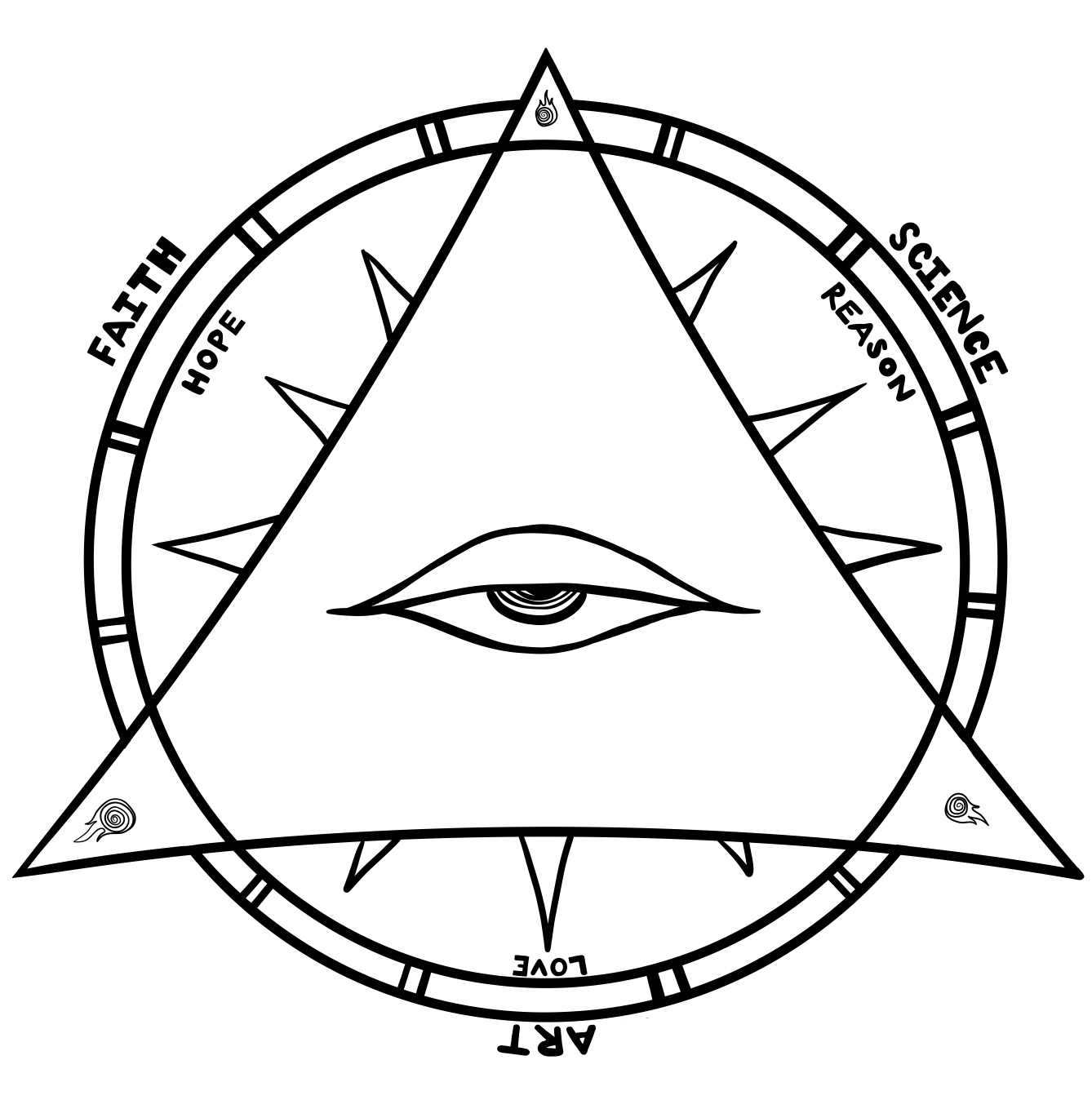
- Theuth, the ancient Egyptian deity credited with inventing numbers, calculation, geometry, astronomy, and, most importantly for this discussion, writing, presented his arts to Thamus, the king of all Egypt. Theuth declared that writing would make the Egyptians wiser and improve their memories, offering it as an elixir (φαˊρμακον) for both memory and wisdom. King Thamus, however, responded critically. He argued that the inventor of an art is not always the best judge of its utility or harm to mankind. Thamus prophesied that writing would have the opposite effect on memory: it would implant forgetfulness in learners’ souls because they would cease to exercise their memory and rely on external written characters instead of recalling things from within themselves. Thus, Theuth had found an elixir not for memory (μνηˊμης), but for reminding (ὑπομνηˊσεως). Furthermore, Thamus contended that writing would offer students the appearance of wisdom, not true wisdom (σοφιˊας δεˋ δοˊξαν, οὐκ ἀληˊθειαν). By reading much without proper instruction, people would appear to be highly knowledgeable but would, for the most part, know nothing. Filled with the conceit of wisdom instead of real wisdom, they would become difficult to get along with. This myth is used by Socrates to critique writing as a tool that can lead to the illusion of knowledge rather than its cultivation through dialectic and lived understanding. He considers writing a “phármakon”, a word with a double meaning: both a remedy and a poison, reflecting writing’s ambivalent power. ↩︎
- Sitting on the toilet. ↩︎
- In The Dark Knight (dir. Christopher Nolan, 2008), Heath Ledger’s Joker uses the phrase “aggressive expansion”, underscoring a central theme of the film: the illusion of order. He argues that societal structures tolerate violence when it conforms to expectations, yet panic when disruption appears arbitrary. This reflects a deeper philosophical inquiry into chaos, moral relativism, and the brittleness of institutional trust. ↩︎
 CyberArtTime

Leave a comment