
Original Post: June 12, 2025
Though I said to myself,
"See, I have grown and increased in wisdom more than anyone who has ruled over Jerusalem before me; I have experienced much wisdom and knowledge."
Then I applied myself to the understanding of wisdom, and also of madness and folly, but I learned that this, too, is a chasing after the wind (hevel).1
For with much wisdom comes much sorrow; the more knowledge, the more grief.
Ecclesiastes 1:16–18
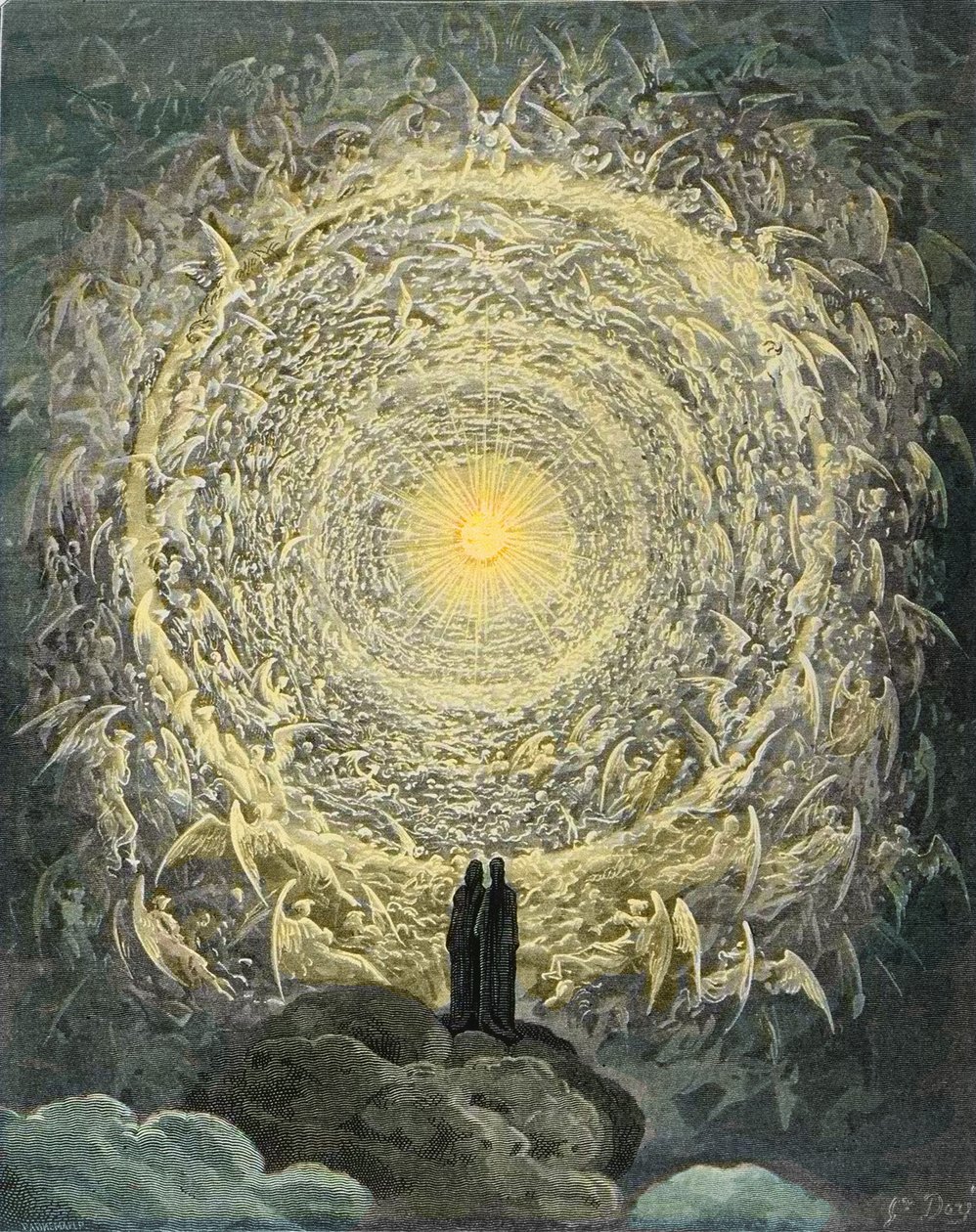
Godliness as Collective Emergence
If reality requires conscious participation, then the highest purpose of consciousness is not power, but coherence and union2. As consciousness integrates and harmonizes, it reveals an inherent divine affinity, expressed as self-giving unity. The mystical path, across diverse traditions, consistently illustrates this trajectory: the dissolution of ego, the flowering of compassion, and a return to Ground3.
This perspective calls for a relinquishing of epistemic control in favor of shared meaning.
This is not an anti-intellectual stance. It represents, in my estimation, a higher intellectualism, one that integrates reason with reverence, and logic with love. It involves the re-harmonizing of cognition with interpersonal relation (Re: Communion).
Each moment becomes an opportunity to honor, align, and awaken.
[…] We have to remember the basic importance of a good, common-sense, realistic, human view of life.
And where this common sense realism is not found, it must be cultivated.
And if it cannot be cultivated then there is something certainly wrong with that person's vocation.
[…] So, the basic requirement of a cloistered and contemplative life
[...] is, before all else,
[…] grounded in recognizing the fact that
[...] we must maintain a healthy human atmosphere and a normal (kind of) human relationship to one another, and to reality - in our communities.
This, of course, goes without saying, but cannot be over-emphasized.
…It is so easily forgotten.
Thomas Merton, Thomas Merton on Prayer, Chapter 14.
The Breath of the Eternal
The Hebrew word hevel translates to meaning vapor or breath, with elusions to something inherently impossible to grasp. It illustrates how knowledge, when sought as a possession or a means to control, ultimately proves elusive and unsatisfying, leading to grief rather than peace.
Life is not a problem to solve, but a presence to receive.
Paradise, similarly, is not something to pursue but something to cultivate.
…It doesn’t reside beyond death or hidden secretly within an undiscovered grove.
…It is found in the act of being rightly aligned with self, the world, and with God.
We are dust and light /// image and mystery.
Let us not “chase the wind.”
Let us breathe deeply of The Paradise already in our midst, waiting to be recognized.
Love. Be confident. Create. Grow.
@ CyberArtTime 2025

- Hevel: Often translated as “vanity,” is more accurately rendered as vapor, mist, or breath. It doesn’t mean meaninglessness; instead, it signifies something transient, elusive, and inherently difficult to grasp. ↩︎
- Coherence and Union: Love and it’s active expression. ↩︎
- The Ground of Being: The Source, definitely expressed as: God. ↩︎
 CyberArtTime
Leave a comment